

Divorce can be a complex and emotionally charged process, and when one or both spouses have international ties, it adds another layer of legal challenges. Vietnam's legal framework governs divorce cases involving foreign elements, ensuring that both Vietnamese citizens and foreign nationals navigate the process with clarity. Understanding the key legal considerations can help couples prepare for potential issues and protect their rights.
- Jurisdiction: Where Can You File for Divorce in a Cross-Border Marriage?
According to Article 127 of the Law on Marriage and Family 2014, Under Vietnamese law, the People's Courts of Vietnam have jurisdiction over divorce cases when:
- One spouse is a Vietnamese citizen and the other is a foreigner.
- Both spouses are foreigners and they are residing in Vietnam.
- Both spouses are Vietnamese citizens, but the marriage was established, modified, or terminated under foreign law, took place abroad, or involves assets located in a foreign country.
Additionally, Clauses 2 and 3 of Article 127 outline how these divorces are resolved under different legal systems:
- If both spouses are Vietnamese citizens but do not reside in Vietnam, the divorce follows the laws of their common country of residence.
- If there is no common place of residence, the case will be handled according to Vietnamese law.
- If the couple owns real estate abroad, the division of assets will follow the laws of the country where the property is located.
For overseas Vietnamese (Viet Kieu) and foreign spouses, it's important to determine whether Vietnamese courts will accept their divorce case or if it must be filed in another country. Jurisdiction will depend on factors such as residency, the location of property, and applicable international legal agreements.
- Grounds for Divorce
Vietnamese law recognizes two types of divorce: mutual consent and contested divorce, each with specific legal requirements under the Law on Marriage and Family 2014.
Mutual Consent Divorce
A mutual consent divorce occurs when both spouses agree to end their marriage. The court will approve the divorce if:
- Both parties voluntarily agree to divorce.
- They have reached an agreement on property division and child custody, ensuring the rights of both spouses and children are protected.
If no agreement is reached, the court will intervene.
Contested Divorce
A contested divorce happens when one spouse disagrees or disputes issues like property division or child custody. Under Article 56, the petitioning spouse must prove the marriage has irretrievably broken down. Grounds for a contested divorce include:
- Irreconcilable differences.
- Domestic violence or abuse.
- Prolonged separation with no chance of reconciliation.
If the court finds the marriage has failed, it will grant the divorce, even if one spouse objects.
- Division of Property: How Are Assets Split?
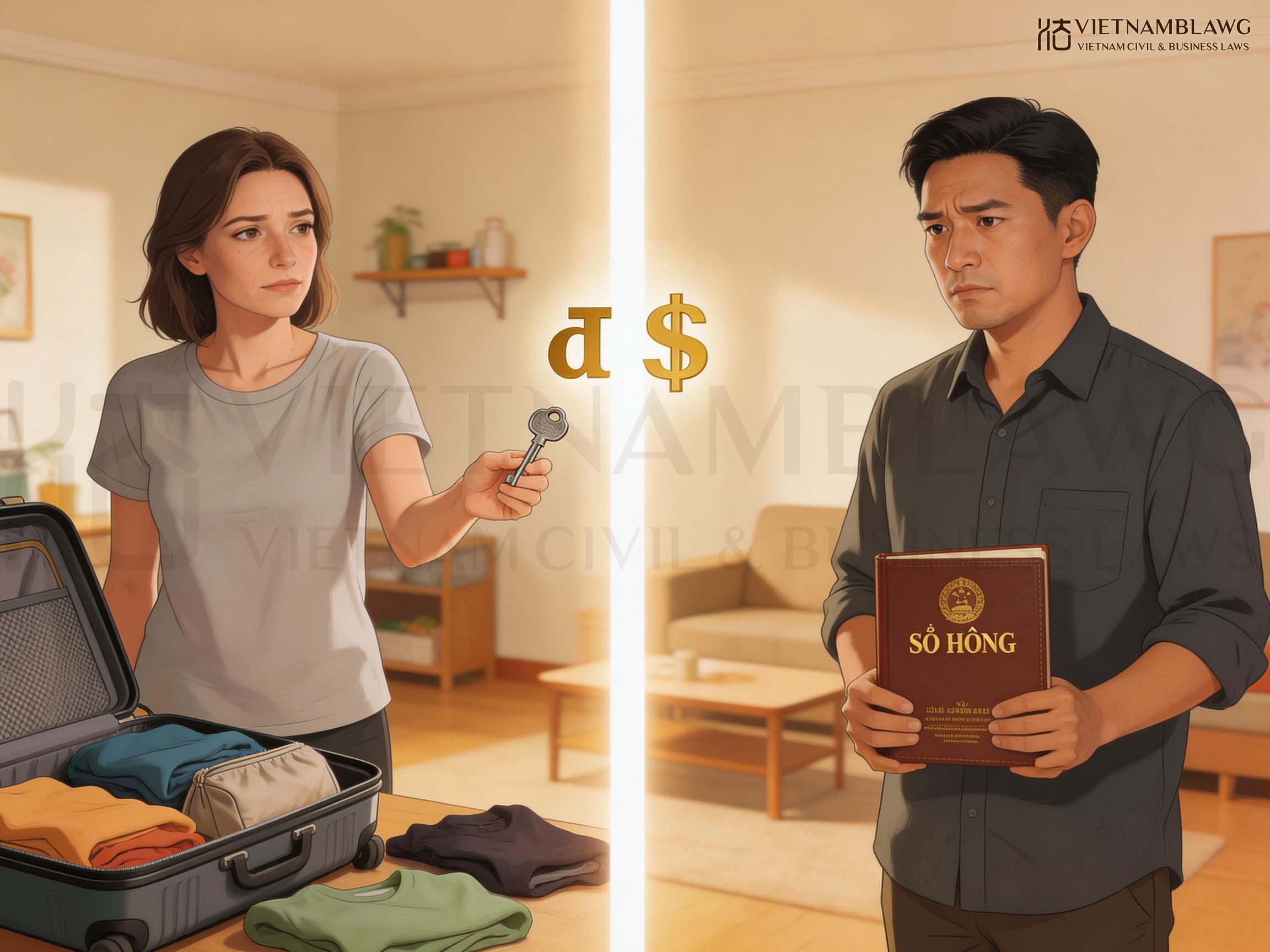
Dividing assets in a divorce involving a cross-border marriage in Vietnam can be quite complex. There are many factors to consider, including prenuptial agreements, the specific circumstances of each spouse, and assets located in other countries. However, to sum it up simply, Vietnamese law follows the principle of joint ownership for property acquired during marriage. In divorce cases, courts divide assets based on factors such as:
- Each spouse’s contribution to the acquisition and maintenance of property.
- The needs of dependent spouses or children.
- The financial circumstances of both parties.
- Whether one party engaged in misconduct (e.g., infidelity, financial mismanagement).
According to Article 59 of the Law on Marriage and Family 2014, property division must be fair and take into account the circumstances of each spouse. However, for cross-border marriages, there can be disputes regarding assets located overseas. Since Vietnamese courts typically only have authority over property within the country, resolving issues concerning foreign assets may require international legal assistance.
As this is a complex issue with many layers, such as the potential involvement of prenuptial agreements and more, we may cover these aspects in a separate article.
- Child Custody and International Relocation
One of the most sensitive issues in international divorces is child custody. Vietnamese law prioritizes the child’s best interests, taking into account:
- The child’s age and personal wishes;
- Each parent’s ability to provide care and financial stability;
- The emotional and psychological well-being of the child.
According to Article 81 of the Law on Marriage and Family 2014, children under 36 months old are generally placed under the mother’s care unless it is determined not to be in the child’s best interest.
If one parent wishes to relocate the child abroad after divorce, they must obtain consent from the other parent or a court order. This can be a contentious issue, as Vietnam generally seeks to maintain strong parental relationships with both parents post-divorce.
- Enforceability of Foreign Divorce Decrees
Vietnam does not automatically recognize foreign divorce judgments. If a couple divorces in another country but needs their divorce recognized in Vietnam (for purposes like remarrying in Vietnam), they must go through a judicial recognition process in Vietnamese courts. This is governed by Civil Procedure Code 2015, Articles 423-427, which require foreign judgments to be submitted for recognition and enforcement by Vietnamese courts.
Conclusion
Divorce involving international elements in Vietnam presents unique legal challenges, from jurisdiction issues to asset division and child custody. Understanding Vietnam’s legal framework and seeking legal assistance can help couples navigate the process smoothly. Whether you are a Vietnamese citizen married to a foreigner or a foreign spouse divorcing in Vietnam, being informed of your rights and obligations is crucial for a fair and legally sound resolution.


Comments